Amos

[a scrap from a larger unfinished fiction piece set in 1916 Connecticut, from the 1980’s]

 …..within minutes, City Hall was buzzing like a beehive in the spring. How does this all concern Amos Woburn? Who at this very minute was licking stamps in a gas lit, paper strewn cubbyhole in Republican headquarters? His tongue seemed swollen from the effort, and his eyelids heavy. Was it the glue, he thought, or the rainy patter on the window that was making him so sleepy. At the very bottom of the political heap, all of twenty-two years and six feet and little under 12 stone and certainly no Casanova but whose mind positively reeled with ideas political, military historical and scientific. He put down the envelope—there were so many—and jotted a few aimless thought for the masterwork he’d been contemplating “The Intellectual Foundation of Our Civilization” which was to tie together—to ‘synthesize’ (Oh! such a word…)—Darwin, Thoreau, Freud, Lincoln, Shakespeare, Plato, Thomas Aquinas and of course, Teddy Roosevelt—a grand theory of the moral basis of power. This magnum opus of a decade of adolescent intellectual progress, sat only twenty three hopelessly tangled pages deep on his desk, and in his darker, nay more lurid moments of introspection seemed not much to show for a youth spent worming through books while his friends were out, uh, getting some. For Amos Woburn, at least in the context of tinyPiscquatFalls’ politics, was nothing. A gofer. A stamp-licking flunky. No matter how violent a storm swirled about Mayor O’Bryan’s succession, little Amos could rest assured that it would safely pass him by—maybe leave him a little damp, but untouched.

But then storms can do strange things.

They can drive bibles through telephone poles and leave lakes where once lay only dust. And lightning: everyone has tales of the close ones—a nearby tree exploding in a shower of sparks. Or the direct hits: a man knocked flat by a crackling white bolt, rising shaken but alive. A rarity to be sure, but some do live, and oft times possess a special magic, a spiritual dimension that was lacking before, as if to be struck by lightning was to be touched by the hand of the Lord.

So was Amos touched.

It was late, and the flickering gas lamp threw shadows of various sizes against the wall. The rain drummed steadily, and Amos looked groggily out the window, following the tiny rivulets that formed at the top of the pane and disappeared at the bottom. His mouth was full of the sweet taste of stamp glue, his lips sticky with it. The posted enveloped were piled up to one side, the much greater unposted stack was off to the other, and between the two Amos surrendered and rested his hand on his arms. Sleep came quickly.

A shot:

the window shattered and a metal file cabinet in the office was punctured with a bang. Amos screamed, more out of surprise than terror, and with a start knocked both piles off the desk, sending letters posted or not fluttering through the office. A cold wind blew in through the open window, spraying Amos with cold drops of rain. He huddled beneath the desk. Something—whether a rational thought or a much deeper survival instinct—set him listening, and his sudden extraordinarily acute sense of hearing picked up the sounds of footsteps running away. One man, splashing heavily across water-covered cobblestones. An impulse to see his assailant overcame fear and he rose and peered out. The wind-whipped rain blinded him momentarily, but he caught a glimpse of a man, his macintosh gleaming wet in the dim gas lit luminescence, trying to run across the cobblestones without falling. His arms were extended for balance, and in one hand he could plainly see a large colt revolver. It stood out black and monstrous against the dreary night. A strong gust swept through the room, shuffling papers, blowing the calendar off the wall. A chill settled in Amos’ spine. That was the biggest gun he had ever seen, and it had fired at him. But he could not make out the gunman. Amos thrust his head threw the shattered window to get a better look. The figure was gingerly stepping around a corner, unable to move with any speed on the slippery pavement. Amos felt angry—there is the man that tried to shoot me and he is getting away. He wanted to do something. Lights were showing in surrounding windows, curtains drawing back. Witnesses brought his courage surging, and Amos leaned halfway out the window into the rain and yelled. “Hey!” The escaping figure froze momentarily but then thought better of it and kept moving. “Hey you!” Amos screamed indignantly, “Stop!” The gunman quickened his step. The rain was soaking Amos, drops ran down his face and his shirt was plastered to his back. “Stop I say!” His screams brought more lights flickering to in the surrounding houses, curtains drawn back and shutters thrown open. “Stop or I’ll call for the police!”

The last threat had an effect. The man stopped. He turned round. Slowly. Amos was wondering just how he was going to call the police when he noticed the man raising the gun. It was pointed right at him. Through the rain and poor light he could not hope to make out the man’s face for the police report. But then, perhaps it would have been of no use, for right above the visor of the man’s cap, shining faintly in the light, was the emblem of the Piscquat Falls Police Department.

Amos ducked back in. The report echoed down the street. The bullet smashed into the window frame, and the exploding fragments of wood caught Amos on the head. As he lost consciousness the surrounding gaslights were extinguished and windows shut with a ragged series of bangs.

After a funeral

I passed out on the couch before 11 last nite and woke up three hours later. Fully dressed, lights on, I think the weather channel on the tube. Took my seizure meds which kept me up for hours. Lynn posted a clip from the news in the middle of the night and there was the one girl breaking down and then Greg being brilliant, nervously playing with his hair, parsing “angel”. Damn. For some reason that dragged me back into the middle of last August, the nights home, back from my wife’s side in the ICU, not knowing what was going to happen, what the future was going to be, frantically running about the house doing chores, radios and TV blaring, talking to her cats, cooking, cleaning, playing music loud, not eating and smoking a little too much weed. Raw memories, crystal clear. Reliving those days. And feeling guilty, too, as my story was long and had a happy ending, and theirs was just a paragraph or two that ended horribly.

(2009)

Autobiography

I dig music. I used to play drums, which was awesome, the crazy gigs, crazy times, getting high, getting laid, getting paid sometimes, raising holy hell and fucking with people. The more anarchic the scene, the better. Blood on the floor, sounds in the air. Think a hockey game, but with notes.  And weirder.

I’ve been writing since as far back as my memory goes.  I used to write articles about strange bands. They’d appear in doomed little magazines, or online somewhere.  I always sweated the writing, broke my back on the things, making written English sound real and not like the crap they taught us in English classes. I had a writing class once and the teacher turned us on to John McPhee. Holy shit.  That was it. That was writing. That was so real. I still think so. Bruce Catton’s This Hallowed Ground  did that to me when I was in high school, or was it junior high? Or 5th grade? A beat up old Penguin edition of Thucydides kicked my ass one summer in college. My mind was really blown by Fernand Braudel’s History of the Mediterranean and the Mediterranean World in the Age of Philip II. I was stuck inSanta Barbara, bored to tears, and I could see the little cities he described up and down the coastal plain there. Feel the same winds. It changed my life, I guess, somehow. Later I picked upLawrence Durrell…damn. The moonlight on the cobbly desert floor just beyond the Delta. I guess those are the influences, the inspirations that I remember. Toss in Cole Porter, Merle Haggard and Don Van Vliet. Maybe well written commercials, film noir, neurology, and of course a life of epilepsy. That’ll fry your brain, epilepsy. All of you normal people see the world one way.  An epileptic sees it his own way, two dimensional, big thick lines, quivering auras, a Van Gogh. A Van Gogh looks real to us. Absolutely real.

I love jazz. I write about it. About the players, the scene, the notes pouring out of their horns, and why people might dig it.  I like the local, the little joints, the unknown. I like a guy playing his axe like there’s nothing else out there but the music. The smell of weed somewhere, the clink of empties, sweat glistening under a bare bulb. Cool.

 This gig dropped into my lap, out of the blue. I never wanted to be a jazz journalist. Never ever. Jazz writing is so fucking dull. The worst. Unreadable. I mean, if you write about music, you ought to try and write as well as the players are playing the music you write about. People should be able to feel the experience of hearing the music through the experience of reading about it. That’s how you get people interested.  That’s how you pack a jazz club on a Sunday night. That’s how you make a difference.

 Otherwise it’s just bullshit. Just facts, names, trivia, bullshit. A phonebook of facts. I try not to do that every week. I try and turn people onto jazz who hate jazz. I try and fill clubs. I try to make jazz fans, one at a time.  Sometimes it works. Sometimes it doesn’t.

 Me? I’m married, thirty years now. We met as berzerk punk rockers in 1979. I’ve had various day jobs. I like day jobs. I rarely play drums anymore, but I love drums. My passions are linguistics, neurology, evolutionary science, lots of history. I love seeing music, all kinds of music. I like old movies. I love really good writing.  I love natural history museums, zoos, historical sites, anything with dinosaurs. I love dinosaurs. I love throwing parties. Wild, noisy endless parties full of smartasses. I love books. And hockey. And LPs for a dollar. And solid colored ceramic coffee mugs. And getting things in the mail. And wearing blazers. I love the desert. And maps. And talking. And women. I love the view out my front window. And driving the freeway late at night with the windows open and the music blaring. God I love that. I love words too, and accents, and languages, and grammars, all kinds of grammars, and people that say fuck in polite company. I love dictionaries.

That’s it.

Brick

(2010)

Parade

(Wrote this for a writing class I had with Sam Eisenstein at LACC in 1982. Pardon the lack of maturity….. The time sense, btw, is very epileptic. In fact the whole thing has a very strong epileptic vibe. I think I’d been diagnosed by this point, but they were still messing with the right meds and dosages–it takes a while to figure out what works best–and the whole story here has a tinge of the Geschwind Syndrome to it. Interesting. But I still wanna apologize for the comic book heroine there…..)

One time Joe’s wife had dragged him off to some such parade somewhere—aren’t they all the same?—and along came a float covered with some semi-naked cheerleaders flipping and flopping to some disco music blasting from tinny speakers—like enormous transistor radios, buzzing and snapping and the thing had broken down right smack in front of them.  Just stopped, jerk jerk then dead.  Everything stopped but the music.  And goddamn if the stupid pompom girls didn’t keep dancing to that beat—BOOM BOOM BOOM BOOM BOOM—he thought he’d go mad.  They were holding up the entire parade—not that it really mattered; in fact he would have found it funny if it hadn’t happened right in front of him—just fifteen feet in front of his place on the curb.  The crew crawled out of the hatches and tinkered with something in the beast’s rear, stood around, kicked the tires.  The cops came up too on their horses, like cavalry, sure, horses dropping big road apples and pissing streams.

But that disco—it wouldn’t stop.  The girls kept dancing and smiling.  How could they be so stupid.  He almost felt sorry for them, but those gleaming idiot teeth and whirring brown legs.  Jeez…. Time for a joke, something sarcastic just to make them feel uncomfortable.  He wracked his brains, but the crowd around him was quicker, yelling “Fix it!”, “Get this show on the road!”, lewd suggestions, outright obscenities.  Joe was somewhat taken aback by the tone;  all he wanted to say was “Take five, girls!” but now he kept it to himself.  Without warning, beer bottles, half-eaten hot dogs, at first one, two, then a barrage rained down on the hapless float.  The girls kept dancing, even undertaking some admirable footwork to avoid foreign objects.  Close, but no direct hits.  One girl got chili sprayed up her leg.  She smiled stiffly but didn’t miss a beat.

It was getting nasty.  The road crew, stripped of the armored protection of the float’s innards, took the crowd’s behavior personally and yelled back, snarling, swearing.  Counter fire.  Joe ducked an empty Miller can.  The air was filled with flying objects.  A group of young thugs pushed their way to the front and began fastballing hot dogs at the crew and cheerleaders.  They wore now nervous smiles but kept dancing, inanely, and the music seemed louder than ever BOOM BOOM BOOM BOOM BOOM, its steady bass throb completely out of kilter with the scene’s anarchy.  Joe heard a cacophony of sounds—shattered glass, yells and squeals, the snap and sizzle of police walkie talkies, sirens, howls of laughter and rage.  “Fuck!” someone yelled, “Fuck!”  Behind him a group of obviously college kids began a lusty rendition of “I Love A Parade”.  Joe had never seen so much flying glass, so many aerial hot dogs.  The street was littered with broken splattered gunk.  Police horses reared, the young thugs were in open combat with the cops and crew.  A parade official, in frilly blue, fell backward off the float, face a mess of mustard.  “Oh my God!” Joe’s wife screeched, nearly breaking his arm in her grip and giggling maniacally.  Slow motion it dawned on Joe—this is a riot, and even slower, you are in the middle of it—and then it was a series of slow, slower, almost still shots—Joe, his wife and friends trapped, packed immobile into the crowd.  The spectators that he could see, those on the opposite side of the street, roiled in sickening waves this way, that way, away from the exploding bottles and hot dogs.  The casualties, standing up, wiped off the mustard, ketchup; clutching their broken skin, showing it to those around them like a prize, or a starfish picked up on the beach—then ducked the next bottle.

Seconds froze, split into smaller fragments that ticked away slowly, almost not at all.  Joe seemed to feel little except a dull, incessant urge to protect his wife.  Instinctively he wrapped an arm around her and pulled her close, yet she resisted—she wanted to see, to gawk, like the rest, protected by the mass of flesh about them.  “Joe!” she screeched, “Look!”  He looked, though at what he didn’t know.  So many actions, so much expended energy.  Cops and kids battled like gladiators right before him, nightstick against switchblade, circling, jabbing, ducking bottles and food.  More figures appeared on the street, jumping from the sidewalk throng, for the immobile float with its terrified, highstepping cheerleaders was a magnet, pulling them out, ion by ion, cop vs. kid vs. onlooker vs. float crew vs. who knows what the street is such a mess.  Joe’s heart pounded with excitement all the people running around like mad to the incessant disco throbbing from hidden speakers.  Joe’s wife screamed in his ear “It’s like they’re dancing!” and giggled and it was true, Joe nodded yes! yes!  “They’re dancing!” and he turned around to the group behind him still singing a broken “I Love A Parade” and shouted “They’re dancing!” and a long haired type sucking on a huge joint almost exploded into laughter, sending up huge clouds of heavy rank smoke and coughed coughed coughed, blindly handing the joint to Joe.  The group rocked back and forth with laughter, shouting “Let’s Dance” and “Trip the Light Fantastic!” and Joe had no idea what else, for he stuck the huge bomber between his teeth and sucked in deep, like he had been shown by a friend from work and Oh Boy he could feel it right away.  Weird weird weird.  His wife screamed and jumped up as a hot dog splattered the seat next to her.  “I’m hit” she yelled and Joe couldn’t believe it.  He looked into her face and she was wild eyed, laughing, shrieking, gesticulating and taking her mustard splashed arm she rubbed it across his face at the same time he exhaled pot smoke into hers, and she rolled her eyes and fell backward into the stoned freaks behind them, who set upon her pushing and pawing.

The mustard stung his nostrils.  Tears welled up and rolled down his cheeks, and he looked downward to see them drop, watery yellow, onto his shirt.  He wiped his face on his sleeve, spreading the yellow further, and then, in a frenzy of contagion, rubbed his face across the backs of the people beside him who, far from drawing away from his contact only seemed driven to a higher state of agitation, squirming and jumping about on their seats.  Everything stunk of mustard, Joe was making sure of that as he rubbed his stained hands up and down his pants.  Then, tears subsiding, he turned his blurred eyes to the street.

It was a complete melee now, with more kids than ever.  They leaped from the stands, pushed through the sidewalks, came rushing up from both ends of the street.  They were black, white, brown, all ages, boys and girls.  They had bottles, sticks, food, knives, their bare hands.  Flailing, shoving, falling, screeching.  They swarmed around the float, climbing its sides, yanking each other off.  Pockets of authority stood awash in the flood, swinging and beating, going under in a hail of kicks and punches.  Joe saw blood—unmistakably crimson on faces, scalps; staining shirts.  The torrent rushed against the sidewalks, pulling some spectators under, sending the rest pressing backward, setting off ripples of pushing and shoving that took hold of Joe and swung him back and forth, trapped in the crowd, powerless to stop.

He was a stalk of kelp, he thought, swaying one way then the other with the ocean currents, pushing this way slowly and then pulled back so that he should fall completely if not for the packed flesh holding him in place.  It occurred to Joe in a flash that if he lifted his feet he would remain suspended, airborne.  Lifting his eyes he watched the fighting across the street, people grabbed at random and beaten, others on their feet trying to ward off attackers, till the once placid rows of spectators whirled and spun like the frenzy in the street.

Joe’s memory here loses all sense of fluidity and flashing before him was a sequence of stills, some quickly, some slowly, some remaining before him forever, some flickering by so quickly he could barely recall what they showed.  There was the teenaged gang member, hair in a net, and evil crescent dangling from one ear, with a hot dog vendor’s basket hung askew from his neck, throwing whole handfuls of wieners into the crowd.  Then close up of the face—a young, clean face scowling, twisted.  A nightstick raised aloft like a naked flagpole, surrounded by a mass of kids, kicking, punching.  Close up of bloodied face, tongue touching busted lip lizard-like.  Eyes—staring staring.  The crowd itself in the street in constant change—one second like this, then like this, always running, jumping, colliding.  Joe was transfixed.  Synapses ceased firing logically—his head locked into place, he couldn’t turn away—the slide projector flashed image after tortured image.  Joe just gawked.  He lost touch with his wife.  The joint burned down to his fingers and dropped away.  He was pushed shoved back forth; stalks whipped about by the storm but held fast in the rocks.  The stench of mustard, the BOOM BOOM BOOM BOOM BOOM of the disco, the tingling of the dope, the nagging urge to find his wife, the frenzied violence only a few feet away; pelting glass and bread and mustard, the screams, the whistles, sirens, yelps, random scuffling on the pavement—image after image, fast, slow, close, far, in vivid color.  The swarms scaled the float.  An army rushing the castle walls.  Ladders flung backward.  Boiling oil.  Vicious grappling on the ramparts.  The cheerleaders fled to the highest point where they huddled like rabbits, surrounded by flowers and framed by a set of goal posts.  The last of the defenders disappeared beneath the mob.  The cheerleaders shrieking held out their hands stop! stop!  They wouldn’t.  On they came, on IT came, the thing sprouting its clutching, tearing hands.  Skimpy dresses torn, pulled off.  Girls balling up in fear and humiliation.  Tears.  Please.  Don’t.  No.  Wild eyes.  Hysteria.  More hands.  Cheers, deep and lusty.  Feeble blows.  boys, terribly young boys grabbing, manhandling, scratching.  Pulled hair, bites, kicks, shreds of clothing waved liked flags.  A barrier had been crossed, a fragile outer shell broken and the contents within, held under such pressure, found sudden release.  Joe heard feeble shouts of protest, but this was not the time for upraised thumbs.  The thumbs down have it.

The float was covered with crawling, scaling, grabbing forms.  Swarms.  The girls disappeared one, two, three into the crowd.  Howling, hooting, shrieking, whistling.  Joe was frozen.  He wanted to move but nothing worked.  Two, three cheerleaders fight viciously.  One has a bottle, broken, glittering in the sunlight.  She waves it, swipes at a head.  It spins around and Joe stares into its face.  Jagged bleeding.  A sudden wave of nausea.  Good God.  She hits another.  He falls, wounded.  Another.  She is a gladiator, a Horatio, daring the others forward.  The crowd draws back.  Howling.  A ragged cheer.  It surges forward, grappling, pulling, yanking, wanting possession.  She holds on, head high, jaw set.  Joe can see the perspiration streaking her bare arms and legs.  A mighty, blonde She-warrior, a thousand ancient dreams fulfilled—a crowd driven to frenzy.  Joe wants to turn it off.  He knows how it will end.  His insides feel like a meatgrinder.

Joe was new to such mass feelings, he thought, never himself been privy to anger turning so quickly to rape, and on some foolish impulse he turned to his wife to show her, possibly, that he was not a part of it all, was not even watching, he did not lust after the She-warrior, that he really loved you, wife, and he pulled his eyes away in time, looking, looking,  a series of shots from the battle before him to where his wife should be and there she was, again, mussed, frightened, spattered with mustard and bits of meat.  Oh no, he thought, “Are you OK?”, shaking her, grabbing her thigh in his big hand and squeezing the recognition squeeze.  She turns to him and pulls her leg free.  He was astounded by how fast the muscles of her thigh retracted with a fear deep and ancient.  She turns to him, staring amazed, aghast, alone.  Those eyes.  And his own?  He turns away.

He sees the bottle with its burning rag hurled high over the crowd trailing a thin wisp of smoke, falling falling in a beautiful arc when splat, a perfect hit on the end of the float, the sound of the impact smothered by the din of battle, but the flames instantly visible, licking outward, devouring the papier-mache frame, dancing around the feet of the maddened kids.  They don’t see it.  Fire spreading about them but their eyes remain transfixed on the She-warrior at the top of the float.  She holds them at bay with her broken bottle, mouthing unheard threats.  Joe wanted to say something but couldn’t.  Behind him a voice drawled “Now who would bring a gas bomb to a parade?” and everyone else making incoherent noises; gawking, pointing, giggling, weaving back and forth with the struggle in the street.

Joe watches the fire race up a kid’s pants.  The kid starts, gestures, jerks open-mouthed and no doubt screaming, dances wildly, soon joined by others, a fire dance, leaping about, jumping right off the float into the street streaming smoke.  More smoke, rich, black and oily, boiling up beautifully and the crowd goes berserk.  The float-top fight slows, stops, and the combatants stare at the flames in temporary disbelief, then, comprehending they leap and scramble down to the pavement.  Some spurt tiny flames from their pants and shirt tails and spin madly, fanning the little fires as they try to squelch them.  At last the steady BOOM BOOM BOOM of the disco fits in with the fire dance, but only for a few seconds, for the flames reach the speakers and with sizzling crackling pops they shut up, and now the pandemonium is complete as the float is engulfed in roaring, snapping flames—poles are reversed and the ions are repelled, sent flinging backward with the waves of sudden heat.  Assailants turn saviors as the battered cheerleaders are helped off the doomed ship, limping, crying.  And She-Warrior, now magically transposed into the brave Captain, is the last to leave.  Disdaining help, she throws her weapon into the street, where it shatters into fire sparkled fragments, steps down a rearward ladder slowly, without a hint of panic.  Once on the street, she turns to face her vanquished foe, then motions for the crowd to grant her entry.  Joe watched her from behind as she stepped onto the sidewalk, and followed her sweat streaked hair till it disappeared into the throng.

Stock photo–Kathleen Winsor

Linda Darnell

I couldn’t find a good picture of Kathleen Winsor, so this is Linda Darnell all naked in the film adaptation of Kathleen Winsor’s steamy novel “Forever Amber”.  Ms Darnell, incidentally, was stacked like you can’t believe.

Stock photo–Doris Dowling

Doris Dowling  (in the white)

Doris Dowling, in the white.

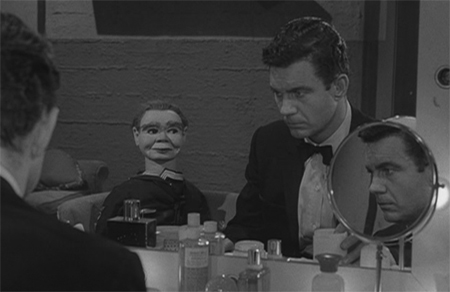
Stock photo–Twilight Zone–the Dummy

Stock photo–Debbie Harry

Grammy Protest

Things have been rough at NARAS, the National Academy of Recording Arts and Sciences. You probably couldn’t tell, not with their two big buildings and a brand new museum and certainly the Awards telecast with all its rock stars and movie stars and high priced commercials. That thing alone looks like a gold mine. Not so. For one thing, they’ve been trying to dump one of those buildings ever since they moved into their fancier new digs. And the Museum ain’t exactly a cash cow.  Ratings for the awards ain’t what they used to be, and most scary of all, dues paying membership has plummeted by 25%. Something is wrong. So NARAS took a long hard look at what needed to be cut. Looked at what was essential and what not essential. They looked at their two buildings and they looked at their museum. They looked and they looked and they looked and they finally came to one conclusion. Too many statues.

So they laid off 31.

The Academy prefers to think of it as consolidating. For example, Zydeco, Polka, Hawaiian and Native American were replaced by the Regional Roots Music category. That’s three less statues right there. Blues and folk are were reduced to one each. Just about anything ethnic was cut back. But Latin Jazz got it the worst of all. The Academy declared it doesn’t exist. It only had one award anyway, just one statue, but that was one too many so the Best Latin Jazz Album award was eliminated. They laid it out bluntly: “The distinction between Latin and non-Latin jazz was restructured…these entries will go to Vocal Album, Instrumental Album or Large Jazz Ensemble Album, depending upon content.” Basically, as NARAS sees it, Latin jazz is just jazz with a few too many drums. Somehow the entire history of Latin Jazz, and the fact that it is a distinct American music form in itself and not just “large ensemble jazz” or a jazz vocalist with a Cuban accent was tossed out the window. Musicians who’ve spent their lives playing this suddenly non-existent music were infuriated. In disbelief they rattle off the same historical litany to anyone that will listen: Mario Bauza, Dizzy Gillespie, Chano Pozo, Machito, Tito Puente, Eddie Palmieri, Chucho Valdes, Jerry Gonzalez…. “This decision is a slap in the face to all of them” Pete Escovedo said. “Like all that they did meant nothing.”

Academy officials do seem confused about this whole Latin Jazz thing. According to Bobby Matos, when the five time Grammy nominee John Santos asked in what category he should enter his new Filosofia Caribena, Grammy officials said it would be included the vocal album category. But why? Well, your compositions includeCaribbean chanting. Chanting is singing. Singing qualifies the album in the vocal album category.Santos was speechless. Now anyone who’s actually heardCaribbean chanting knows that Dianna Krall doesn’t come to mind. Nor Bobby McFerrin.  Hell, not even Dwight Trible. Apparently the academy hadn’t thought through all the details. Or even bothered to listen.

It’s the not listening, more than anything, that is so infuriating to these musicians. Read through all the handouts, emails, the news stories in the paper, online, on TV, the posts on Grammywatch.com, hear the angry outbursts on radio, on stage, or on the phone, and they cannot believe that NARAS president Neil Portnow and his team seem so completely ignorant of just what Latin Jazz is, and what is has been for six or seven decades now. Or that Portnow and crew simply do not comprehend just how rude and disrespectful a decision this is. A bunch of well known Latin Jazz musicians decided it was time to return the love and showed up to picket the NARAS Executive Board meeting at the Beverly Hilton. Nice place. Security wouldn’t let the musicians near it. So they went out to the corner of Wilshire andSanta Monicaand raised holy hell, waving signs, chanting, banging on agogos and bongos and blowing horns. The media was out in force, interviewing everybody, getting great video for the night’s news. Two time Grammy winner Oscar Hernandez looked up at the Hilton and despaired just for a moment. “It’s like nothing we do means anything” he said. “It’s like my two Grammys were for nothing.” A car went by, honking its horn, and he snapped out of it. “But we’ll show ’em!” He laughed and waved at the cars. Another honked. And another. Bobby Matos started beat out a furious a clave on the cowbell and a pair of trumpeters played a ragged “El Manisero”. It was a party again. Deep inside the bowels of the Beverly Hilton, Neil Portnow could hear nothing.

Yvette

(short story, 1980’s)

The trolley jolted along Fifth Avenue.  Myles stared at the floorboards, watching the shuffling feet.  The car lurched to a stop, water splashing off the track and the wires humming and crackling in the fog above.  Off the street could be heard curses and snippets of conversation.  Passengers were pushing and shoving, getting on and off, vying for seats.  Myles kept his eyes fixed on the floor.  By staring at one spot, one could see a remarkable variety of footwear, even in cold weather.  Not only boots and rubbers, but shoes of all kinds–wing tips, long pointed Spanish toes, cheap leather clunkers.  Even bare feet, bruised and freezing and dancing about amid the hardwood heels.  Myles was amazed at just how much one could see in footwear, of what one could establish about station, gender and generation by casting the eyes downward.  Perhaps if he just stood there, hand firm on the strap, as the trolley car made its way up and down Manhattan and stared at people’s feet he would come up with some theory, even a fundamental truth, about Man’s place in Nature, in the Universe.  Who knows?  People had been raising their eyes towards Heaven for eons and look what they’d gotten:  the Twentieth Century with its Great War and Bolshevism and  Influenza.  Now he would stare at feet for a while and come up with something.  Yes indeed, just let Myles ride this trolley car up and down Fifth Avenue for a couple months and we’ll see what he comes up with.  He’ll show you…

Shouting from the street snapped him out of it.  Myles stood up on his toes and peered over his neighbors at the scene– a wildly gesticulating Italian driver standing between his bored donkey and an outraged upstanding citizen in black cape and top hat, who was set upon braining the hapless animal with his walking stick.  In the middle and attempting to mediate was a policeman—one hand applying delicate restraint upon the well-bred upraised arm, the other jabbing its nightstick into the outraged Italian belly.  Spectators howled and guffawed, and Myles could almost see the cop’s handlebar mustache quiver with repressed fury.  What luck, he thought, such a perfect miniature of the class struggle all the Bolsheviks and anarchists are raving about.  This is supposed to be what I am terrified of.  His old college anarchist chum told him— screamed at him, really—that the entire history of mankind could be summed up that way–Capital vs Labor, with the police always on the side of Capital, Big Money.  The cop was alternating his polite patting of the gentleman’s arm with sharp billy club jabs at the greasy driver’s midriff.  It was all too perfect.

The car lurched forward again, rocking Myles about on his tiptoes as he strained to see.  Then, remembering his theory of a few moments earlier, he stretched himself up as far as possible to get a look at their footwear.  The Italian was dancing about in his ragged cloth pull-ons, and the cop impatiently tapping one of his shiny NYPD boots.  But the gentleman–well, the source of the disagreement rested atop one of his fine oxfords, steaming in the chill.  It was as fine a donkey turd as one could hope to see, and the gentleman held his bedecked foot fast so that everyone could witness the indignity plopped upon it this damp afternoon.  No doubt to his upstanding mind this one animal dropping represented all that need be said about the differences between rich and poor, Republican and Democrat, civilization and barbarism.

Alas, the progress of the trolley carried Myles away from such a perfect microcosm and as he could not rise any further on his toes without losing balance he lowered himself to his normal height and set his gaze again on the floorboards.

The struggle for standing space had not yet ended and pairs of feet still shuffled about.  Myles watched their movements but his thoughts were still on the battle he had just witnessed, and the implication for the theory of the social value of footwear.  Perhaps he had something here–an article in Harper’s at least.  Too bad he couldn’t write worth a damn.  But there were plenty of starving wordsmiths who could put it into words for him.  He knew some himself.  He might even send a few wires when he got home.  Give them time to tie up the loose ends and come to the Big Apple.  In the meantime, Myles could ride the trolleys and stare at feet.  He’d find the answers, rescue mankind from foolishness and ennui.  An old spinster stepped up next to him.  Her shoes must have been fifty years old.  Leather a faded white, chipped wood heels nearly two inches tall, greenish copper eyes instead of lace holes.  My how shoes have changed.  Time, he thought, is a whole new element to consider.  Not only fashion and economy but time. The whole thing was suddenly growing complex.  The car hit a nasty bump and jolted violently.  Myles slid and for a second lost his grip on the strap and almost dropped to the floor of the car amidst his subject matter.  Around him passengers swore, grunted, shifted weight.  The bell rang incessantly.  The idea of riding the trolleys all day suddenly grew wearisome.  The book didn’t even have a title.  How about Sole Searching?  The car jolted again.  Myles decided he had better lay off the puns.

A fat man was smoking a particularly obnoxious cigar.  Each bump of the car sprinkled ashes liberally upon his neighboring passengers.  Myles had never experienced such rancid smelling tobacco.  The grower must have been extravagant with the fertilizer.  The draft carried the smoke right into his face where, combined with the odor rising from all the packed bodies it seemed enough to make one swoon.  His stop was a long ways up, and a miserable drizzle was coming down outside.  There must be an alternative to getting off the trolley and waiting in the wet throng for the next one.  His ears picked up the delicate squeeze and spray of a perfume atomizer behind him.  It was a miracle.  Myles was not the biggest fan of bottled scents but any of them had to better than that stogie.  He switched hands on the leather strap he was clinging to and spun around carefully, eyes still on the floor so as not to be obvious.

The move was a fortunate one, for there before his widening eyes was what was then called a well-turned ankle.   Remarkably well-turned, in fact.  As the perfume he had spun around for wafted into his face, light and flowery, he followed the ankle’s course out of a daring open-toed shoe, into a perfect calf which curved of so delicately up and out of sight under the folds of a long overcoat.  It was wrapped in a layer of silk hose that shone silvery in the dim light at the bottom of the car.  Maybe it was the draft, or the stench of the stogie, or the rather overpowering scent of the perfume, or whatever, but Myles suddenly felt tingly all over and, fearing a fall, held onto the strap with both hands.

Myles could not pull his eyes away from that leg.  It stood there, balanced atop a spindly, delicate high heel, yet it did not shift and slide with the jolting and bumping of the car—as did his own feet—but rather moved with the flow, a little to this way, a little to that—almost fluidly.  He remembered great stalks of kelp off a California beach, and how he would hold his breath underwater and watch the flow gracefully back and forth with the waves above.  But the overcoat that housed the leg quivered with the rattle of the car, and the trembling caught his attention.  The coat was thick and wool and looked itchy to the touch; it also rather unconventionally buttoned down the side, big thick seashell buttons that looked man-sized.  The garment fit loosely, and between the buttons the fabric pulled away, obviously letting in a draft as well as the quick glimpse of stranger, something Myles could not resist.

Again fortune was on his side as his eyes, in disbelief, caught not only a glimpse but a solid eyeful of what was beneath that heavy outer garment.  There was no dress to be seen.  That well-turned ankle was nothing compared to the stretches of silky leg visible between the buttons of that coat.  Ever cautious, Myles raised his gaze slowly from the calf to the knee and even, gulp, to the thigh.  It was all there, within reach, but touching was out of the question.  Both his hands gripped the strap above paralytically.  Only his eyes moved, ever upward.  At last they came to the frilly hemline of a short, short skirt.  Having attained the peak, his lips pursed together involuntarily and let out a near silent wolf whistle.  Myles came to his senses and stopped staring.  Nervously he reached into his pocket for a cigarette.  As he drew it upwards toward his mouth he found himself looking right into her face.  He froze.  She smiled knowingly, her eyes on his.  He held the cigarette between them, not knowing what to do.  She snatched it from his fingers.  “Merci” she said.  “Have a light?”

Myles was saved by instinct.  Smoothly he drew out another smoke for himself and then, with one match, lit both.  She drew deeply and then craning her head backward, exhaled toward the top of the car where the smoke hung briefly before dissipating in the draft.  “Merci” she repeated.  “I am completely out of cigarettes.  How could you tell?”  Myles could feel the sarcasm and felt like an oaf.  She must have seen it.  “I am only teasing. Never mind.”  She blinked twice.  Myles looked into her face again.  She had long lashes and rouged cheeks and lipstick and a little button nose and was pretty as hell.  “Do you ever smoke clove?” she asked.  Myles looked confused.  “Do you dance?”  He was too taken aback to answer.  “Do you speak French?  Do you ever talk?”  She giggled and the bell clanged as the trolley approached the next stop.  “Well, do you?” she asked again, jabbing him a little in the side with her elbow.

“Hell yes!” Myles shot back, laughing.  It was all he could think of saying.  She giggled again, turned round and looked over her shoulder.  “Where are we” she asked him.  “I– I– I’m not really sure”, though he was, or would have been under normal circumstances.  Myles had been riding this route everyday for a couple of years.  “Me either” she said, waving her free hand in front of her face, “but that fat man’s cigar is making me ill and I’m getting off. Will you join me?”  With that, she slipped to the edge of the still moving trolley and leaped off.  As she jumped her coat flapped up a bit, exposing both wonderfully shiny legs.  A bit panicky, Myles followed, pushing his way to the car’s edge, knocking into the fat man and sending his cigar flying, ash spraying everywhere.  There were curses and howls of protest and the once placid passengers turned on him.  Myles felt blows at his back.  He made the edge of the trolley when an incensed man took him by the shoulder and flung him from the car.  Myles just barely caught his balance when he hit the pavement.  He turned to look at the guy who had pushed him.  He was rubbing his hands together for a job well done, while his fellow passengers crowded around , craning to see the villain, threatening him with fists and fingers.  “And stay off, ya jerk!” the fat man yelled.  Myles turned round.  Something struck him in the head and fell at his feet.  Brushing himself off he looked down to see the now dead cigar.  He burst out laughing.  The perfume scent was on him again.  Someone took him by the arm.  “Popular fella, aren’t you?”  It was the girl.  She was so French.  “Yeah, you could say that.”  Myles was so American.  They strolled off down the avenue arm in arm, the lights of the city flickering on around them.