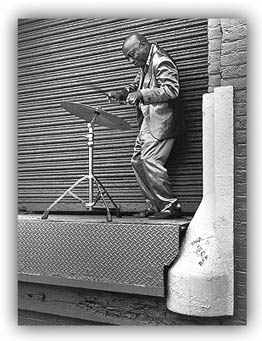
Jazz writer

There was that time at LACMA a couple years ago, one of their Friday jazz nights, and I’m chatting with some people. A guy just cuts right in and snarls Hey, is your name really Brick Wahl?   Uh, yeah, it is. Well, how the hell did you get a stupid name like that?

I politely explained. My name is Phil, my wife’s name is Phyll…so I got the nickname, etc etc. He didn’t understand what the hell was wrong with two people having the same goddam name. I said oh well. He said I’m a jazz writer, too. Can you get me a job?  I told him to contact the paper. He thanked me and split.

Jaco Pastorius

On the first day of  The Playboy Jazz Festival….

Dude, hey dude, hey you, wait a minute dude, stop! Stop! I stopped. You were great, man! You were awesome! Star struck. You play like Jaco Pastorius, man! Just like Jaco Pastorius. They all shook my hand, not believing they were shaking my hand.

Uhhhhh…Thanks a lot, man, but I ain’t a bass player. Say what? You’re not a bass player? No, I was a drummer, though. Ohhhhh…yeah, that’s right, a drummer. You were the drummer. He was the drummer! You were?

I left wondering who I was. No idea, I’d been in the press room drinking ice cold beer and listening to Hugh Hefner speak and George Lopez joke. Playmates dashed about in matching pink outfits, cute as bugs. That’s where I’d been, not up on stage playing like Jaco Pastorius and being awesome.  Besides, the real Jaco Pastorius had a melt down on the very same Hollywood Bowl stage. An ugly melt down, a bad scene. The beginning of the end. Was this an omen? I mean I wasn’t even an awesome drummer. Not even a non-lousy drummer.

It’s more fun when they think I’m a movie star. This dead bass player shit is creepy.

Jazz and the death of the middle class

(This is a long piece never published or posted and that I believe was written in 2012. It reads like a couple pieces turned into one. I suspect that’s why I never posted or submitted it. I’ve left it as is rather than update it to 2014.)

You ever been watching an old movie and wondered just how much the prices then compare to now? Drove me nuts. So I looked around and found this site. So when Bogie asks for a dime to make a phone call in 1941, that’s a buck and a half today. A small chunk. When John Huston drops a silver dollar into Bogie’s palm in 1948, that’s a ten spot today. Not bad. It’s a fun toy to play with, this site.

Inevitably, though, you start applying it to your own life. Turns out I paid nearly $40 to be deafened by Deep Purple in 1974. and that beat up Buick Opel I bought for $350 would be $1800 today. $1800 seems a bit much for that heap now. There’s a gnawing sense that maybe the concept of $350 then wouldn’t match the concept of $1800 now. Did I really think of it the same way. Did $350 then seem like $1800 does now? I have no idea, and it’s me I’m talking about. Me thirty nine years apart. I can’t tell. I was making nearly $12 an hour in 2012 dollars at that silly-assed little job in 1979. I quit that job to be in my first punk rock band. Lifestyle issues. Work started at 8 am. I was partying till 4 am. Either the band or the job had to go. You guess which.

Now it gets less fun. I took the going rate for what I do now and see what that would have been in 2003. Turns out my pay today would be a little over half of what I made ten years ago. Of course, there was all kinds of overtime then. There’s none now, or it’s unpaid (if you work in an office, you know how that works.) So when you figure in my weekly take home then versus now in 2012 dollars, I am making half or what I made then. That’s right, 50% less. If I go back to 1993, when I first began in my chosen profession, I am making the same as I was twenty years ago. It’s like the last twenty years never happened. Of course gas is higher now (even accounting for inflation), and medical insurance is much, much higher. So I am actually earning less now than when I started out twenty years ago. A lot less.That is not only depressing, it’s astonishing. Part of that whole growing income disparity we’ve been hearing about.

Of course, I’m not the only one. This applies to the American middle class across the board. Not everyone, of course. In fact a segment has done very well. That top 20% of the US, the ones who have 85% percent of the property and over 90% of the liquid cash (i.e., real money), they’re doing terrific. There are many, many more wealthy than there ever were before, if you drive around southern California you’ll pass though vast swathes of suburbia that are devoted to them. Their big beautiful houses and expensive eateries and stores selling ridiculous things. The problem is that the other two thirds or so of the middle class have been losing ground. Their wages have plunged up to 50% historically, compared with ten or twenty years ago, and they pay much more medical costs, much more for a lot of essentials. Many of the have mortgages set bubble high, and that housing bubble burst a long time ago. You keep hearing about the disappearing middle class, you can see it when you use a little inflation calculator like this. Seeing how much you make now would have been a decade or two ago. In most of your cases, it is very depressing.

Now let’s get to my point, which is jazz, and where it’s gone, or really where the fans have gone. Well jazz was a middle class music. Some rich people, sure, but not so many…they were much more into putting on the tux and listening to classical music. That’s rich people music. They keep symphonies going. Jazz clubs were filled with people making a good living working hard for decent money, all the middle management people or civil servants or academic types. They weren’t rich, they weren’t poor, they were what was once thought of as the backbone of the country. Now the wealthy are the backbone, the job creators, the ones to whom we all look to hire and pay us and keep us off the dole. Sometimes they’re jazz fans. We in the middle class don’t make much money, and more often than not a lot less money, but we get by. We just cut out the extras. The new car, the overseas vacation, the nice restaurants. The jazz. We have to cut out jazz. Most middle class people cannot afford to go to clubs anymore. We stay home, listen to CDs and the radio and remember all those nights hearing some of the greatest music in the whole world.

It’s not the first time economics has throttled the music. The Depression wiped out the music of the 1920’s, all that hot and wild stuff. Record sales crashed by 1931, rock bottom, clubs and music halls closed, musicians nearly starved. The end of Prohibition, closing all those easy money speakeasy’s, just piled it on. Jazz recovered, but it emerged a different thing, big bad swing, selling to kids with a little change jingling in their pockets. That thrived until the economic and social dislocation that followed World War II when the crowds dried and the big bands had to bust up, a virtual mass extinction. It was all crooners and R&B, and be bop changing everything from the inside. Jazz recovered again, but was much smaller…smaller bands, smaller clubs. Still, there was money in it.  Labels thrived, and musicians made a living. This lasted a whole generation, during rich the music reached its creative apogee. Virtually every one of the major figures in jazz was from this time. Even the big bands that had lasting influence — Basie and  Ellington and the rest — worked during this period, no matter how far back in history they went. And this was a period of fairly steady economic growth, rising wages and am expanding middle class.  Your average Joe could afford to buy lots of jazz records, and there were lots of jazz records to buy. Your average Joe could afford to go to jazz clubs. Basically your average Joe could afford to be a jazz fan.

The economy went into a steep dive in the seventies and the middle class took a beating. Jazz hit the skids too, the fans disappeared, record sales dropped, there were less clubs. Fusion thrived at first, but it too lost steam by the end of the decade. The decline has always been marked up as a generational thing, rock music taking over, which was certainly true. But I wonder if the miserable economy that went on a good ten years had anything to do with it. I’m inclined to see it that way.

Economic growth picked up in the early 80’s but so did a rise in wage disparity…the middle class receiving less, the upper class more. This trend continued through  the early 90’s,  a little more each year. It leveled off somewhat during the rest of the 90’s, then renewed again in the 2000’s, until by the time Wall Street and the housing markets caved in 2008, the middle class was already shrinking, battered by the inexorable decline in their wages and benefits, outsourcing, jobs going abroad and corporate consolidations. Going out to clubs once or twice a week–which is what jazz needs to maintain an audience–became a financial risk. You spend too much money. Audiences were already dropping in 2007, even though here in L.A. there was a sudden increase in venues. Then came the crash. The stock market crashed. The housing market crashed. Jazz crashed. Audiences dwindled. Clubs folded (or stopped booking jazz) at an incredible rate. The middle class had been on the ropes for nearly thirty years and in 2008 caved in completely. Venues–and businesses in general–that catered to a middle class clientele  struggled to survive. Those that drew the upper class mostly held their own. And that trend included almost all jazz clubs in Los Angeles. The high money places tended to survive, the smaller joints like Charlie O’s or the Cafe 322 went under. I can count the surviving full-time jazz venues on the fingers on one hand, and not even bother with the thumb. And CD sales? You van make the top ten in the national sale charts by selling hundreds of compact discs. Hundreds.

I wouldn’t take this analysis too seriously. It’s just opinion. I’m not an economist, or even a businessman. I was just a jazz critic. And I know there are all sorts of reasons I haven’t even touched on, mainly generational. And maybe the music is stuck in a stylistic rut. All the various things you hear people say. But I’ve just had a nagging suspicion that maybe economics had a lot to do with it. This came to me as I wrote my jazz column in the LA Weekly. When I began in 2004 there were a lot of jazz joints out there. And often a lot of people in them. The number of people  began to drop off in 2007, something I could tell both from personal observation and from the complaints of the club owners I dealt with. Then in  2008 the numbers plummeted. Scary. It picked up a bit as people got used to the new economic reality, but those people weren’t buying dinners anymore, and were buying less drinks. Some weren’t spending any money at all. But even that audience began to disappear. There were bright spots–the Blue Whale, Vitello’s, the occasional Jazz Bakery shows scattered around town. Vibrato kept at it, Catalina still booked jazz gigs, maybe an occasional few others. But they’re wasn’t much else.. Gigs disappeared, and fans were few and far between. That hasn’t changed much since. (I think this was 2012).

The middle class is barely hanging on in this country. We hear that time and time again. Jazz isn’t hanging on at all. When they gutted the middle class, they buried jazz. If it weren’t for rich people donating to museums and institutes, I don’t know if it’d be there at all.  But then I go to the Blue Whale and think maybe it’s being born again. It’s not the sort of jazz I grew up with, but then it never is. 

The old fashioned jazz joint..tables, burgers, drinks, fans and a killer band. That's Chuck Manning on tenor and the Charlie O's house trio of bassist John Heard, drummer Roy McCurdy and pianist Andy Langham.  Three sets, no cover, two drink minimum.

The old fashioned jazz joint..tables, burgers, drinks, fans and a killer band. That’s Chuck Manning on tenor and the Charlie O’s house trio of bassist John Heard, drummer Roy McCurdy and pianist Andy Langham. Three sets (or was it four?), no cover, two drink minimum.


(Photo from Hot August Jazz at the invaluable AllAboutJazz.com. Charlie O’s closed that month.)

.

.

It fades, pads closing, in a long, drawn out sigh….

It is a travesty that so little L.A. jazz is visible on YouTube. It really is. It’s not that nobody was filming…there was always somebody filming. So where the hell is the footage?  Typical lazy jazz fans…..Being one, I should know. But it’s a shame…all that extraordinary music and poof….it’s no more. Gone.

But I managed to find a clip of Herman Riley at Giannelli Square out in the Valley. Riley was one of the most perfect tenor players I ever witnessed. Breathtaking. And dig that Giannelli Square…..yet another lost L.A. jazz joint. The recession was brutal to this town’s jazz scene. Watching that scene melt away as the economy tanked was so sad it hurt. I had an especially stark vantage point writing Brick’s Picks for the LA Weekly during those years. The clubs closed up and all those connections drop away. All that music passes into history. Hell, not even that. It passes into oblivion, unrecorded. No one recorded it, no one filmed it, scarcely anyone even wrote about it. All that creativity existing purely in the now…and now that now was …then, and is gone. When we who saw it finally pass, it will not be history anymore, it will be gone, nothing. This town’s history does that, disappears. Plowed under, forgotten, never existed. It’s all future in L.A., and no past. Don’t look back, there’s nothing there.

I still miss Herman Riley. I recall a show at Charlie O’s…Herman Riley, Nate Morgan at the piano, John Heard and Roy McCurdy bass and drums. Damn. The music felt like it would live forever, but it doesn’t. In fact if I hadn’t written about it I probably wouldn’t even remember that particular night at all. Or maybe I would.

Yeah, I would. It was that good.

.

John Altman

John Altman plays with the Mark Z Stevens Trio tonite, Saturday Feb 2, at the Desert Rose in Los Feliz, corner of Prospect and Hillhurst. Music is 7 to 11. There’s no cover. That’s the bare facts. Everything below is just my usual charmingly humorous diatribe, but hell, if I were you I’d read it. Besides, Mark asked if I could spread the word about the gig. I said sure, Mark, anything for you babe.  Because that’s the way we talk in show biz, and that’s the way we roll. Continue reading

Roy Haynes

(an email from 2006)

Saw Roy Haynes last nite (4/6/06) at Catalina’s. Absolutely first rate jazz. Jaleel Shaw is a killer alto, some Jackie McLean edge to his tone. He also did a long drawn-out blues on his soprano that seemed to have the spirits of both Lucky Thompson and a down in the dumps Pee Wee Russell floating over the stage. The piano player was great, though his name utterly escapes me now (some reporter I’d make…)…there was a phenomenal “Green Chimneys” and while Haynes, bassist Dan Sullivan and Shaw played the introductory figure straight, the kid on piano did it in some kind of counterpoint that made the Monk even more Monk. And Haynes…man, that cat is 80 years old and plays literally better than most half his age. I mean that, literally. He was perfect.  Drums can be godhead, and man, this reached it. He’s also funny as hell, strutting around out front playing his pair of sticks into the mic, a one man Rat Pack killing the room with wisecracks and heckling, demanding and getting a white bacardi with a dash of soda, on ice, with a slice of lime. Looking maybe sixty, a really fit, lithe sixty at that. Good genes.

Dig this one. He’s there through Sunday. I am definitely gonna reprise this experience myself.

(and this is from a Brick’s Picks in the LA Weekly, 2007)

Last time  brought his quartet into the Catalina Bar and Grill, every set was a sensation. The jazz was intense, be bop and hard bop and post bop and assorted off the wall takes. Alto player Jaleel Shaw burned in the spotlight, looking and sounding a lot like the horn players Haynes played with back in the day.  And Haynes himself—his drums chops were so on, his patter so warm, his jokes and jibes and stories so damn entertaining you could not believe the man was 81 years old.  Anyone over fifty in the audience felt old in comparison. Haynes has played with towering figures of jazz history—Prez and Bird and Monk and Trane and Getz and Miles among—but Haynes himself is not just history. Not yet. The guy still dominates a room from behind that kit, driving his young quartet to make killer jazz music. Between solos he takes a breather now and then, goofing with the crowd, but then he is 82 now. If you are a jazz fan you must see Roy Haynes once before you die, because apparently he never will.   (2007)

(And this too is excerpted from my LA Weekly column, 2009)

Roy Haynes is eighty three. Of course, that’s in Roy years…he’s about forty three in regular people years. How else can you explain this legendary octogenarian’s energy? This cat plays his ass off…but even more impressive, he makes the kids in his Fountain of Youth band play their asses off. If you’re looking for labels, the music they play is hard bop and post bop—which means that it’s equal parts hard grooving, wild soloing, and non-retro edgy—with plenty of space for the band to cook. Alto player Jaleel Shaw’s sound is NYC hard, so that even his gorgeous ballad passages have a diamond edge (think Jackie McLean). And Haynes demands and gets maximum dynamics out of pianist Martin Bejerano and just the right notes from bassist David Wong. And readers leery of paying big bucks for nostalgia, with dear old cats who ain’t what they used to be, should listen to Whereas, Roy’s live release from 2006. You’ll think you’re hearing tracks from the sixties but that was Roy Haynes, eighty one years young.

So it utterly mystifies all us here at the L.A. Weekly jazz bureau why the hell the house ain’t packed to the rafters when Roy Haynes is in town. As illustrated in his A Life In Time cd/dvd box set (on Dreyfus), Roy Haynes is a living, breathing, playing, still creative history of post-war jazz. Not only has he led some great sessions, but the man played with Monk (take Mysterioso) and subbing for Elvin Jones in Trane’s quintet (check out the bombs he’s dropping on “My Favorite Things” on Newport ‘63) and with Monk with Trane (At the Five Spot) and, oh man, Lester Young and Charlie Parker and Bud Powell and Fats Navarro and Sonny Rollins and Miles Davis and Eric Dolphy (Out There) and Sarah Vaughan and everybody else (including last month with Phish; and see if you can find the clip of him with the Allman Brothers on “Afro Blue”). He’s all over the record collection of yours, tucked away in the credits and bashing and skittering and k-kicking, brushing and hinting, placing stunning rhythm intricacies here and perfect empty spaces there, driving and swinging and bloozing and dancing across that kit…. A pure be bop drummer. And live he spins stories and cracks wise and is a first rate showman. You really have to see Roy Haynes.

Lushes talk through the bass solos

(2008/2012)

Wow…. Here’s a Brick’s Picks  from June 2008, just a couple months before the economy finally tanked. There were so many clubs, so many shows, so much live music. Audiences had already peaked–the Recession had been on since late 2007–but it hadn’t quite sunk in with club owners yet. It wasn’t until the housing market imploded, Wall Street collapsed and banks began folding that audiences dried up. Some fans had lost their jobs, some people were terrified of their own credit cards, and a lot of people were doomed by mortgages. It was probably the last bit that doomed the clubs.  Jazz fans were heavy into real estate speculation.. You’d sit at the bar at Charlie O’s between sets and that is what they’d talk about. They were mature, over all, and knew a good thing when they saw one. They snapped up houses, ridiculously over priced houses, betting the future on a terrifying mortgage. That was their doom. If you figure the younger jazz fans tended to be highly paid internet savvy yuppies (remember them?) who racked up stratospheric credit card debt…well nobody was paying cash at jazz clubs. It was all plastic. The older dudes were sitting  on their real estate holdings, the younger ones knew they were gonna make a zillion dollars in the digital industry. When the real estate bubble burst and the stock market crashed (taking with it all that Silicon Valley venture capital) it was like a scythe went through the jazz audience. All that remained were the rich, the lucky and the cheap. There are only so many rich, even fewer lucky, and the cheap ain’t buying. Suddenly jazz became a very bad business model for a music venue. Now there are almost no jazz clubs left at all. Read this column from 2008 and weep.   

There’s good jazz all over town this week. Too bad this is such a big, wide town. But it is possible to actually club hop the LA jazz scene, if you time it right, even though the damn jazz clubs tend to finish up at midnight in this town, which makes absolutely no sense at all from a jazz hoppers point of view. But still, it is possible, if you keep an eye on your drinking and avoid the vipers outback. So let’s check out Friday for starters, where the very entertaining Jack Sheldon—a veteran of west coast bop—is at the Café 322 in Sierra Madre and avant saxist Vinny Golia is just down the 210 a tad at the Pasadena Jazz Institute (in the Paseo Colorado). Of course, that’s the kind of jarring genre change that will make your skull crack. But somewhere in between there stylistically will be saxist Chuck Manning at Café Metropol downtown, and Manning never fails to knock us out with his playing…when he’s leading his own quartet his horn is set so beautifully inside the understated arrangements that you can almost miss just how brilliant and even edgy his ideas can be. Now, because the Metropol has to stop at ten (the yuppie neighbors complain) you can check this one out first and then decide between Sheldon or Golia. It’s so simple. Logical even.

Now Valley-wise on Friday, saxist Pete Christlieb and trumpeter Carl Saunders do the Back Room out in Canoga Park, but to be honest the jams will be so good and the between set breaks so long you won’t want to leave which makes this a bad start for club hopping. Trumpeter Kye Palmer’s quartet at Spazio is a much better starting point for a set or two and he’s such a fine straight ahead player….then go to La Ve Lee in Studio City for an uproarious Poncho Sanchez set or head deep into the innards of the Valley to Charlie O’s for saxist Charles Owens. When Charlie O get’s cooking at Charlie O’s it just might turn intro some of the best jazz you’ve seen since gawd knows when—a Cole Porter standard segueing into some Eddie Harris funk into some deep Trane into a plain dirty blues…. Then again, the quintessentially swinging guitarist Kenny Burrell’s quintet is at Catalina Bar and Grill, but he’s there all weekend, which gives you options. So maybe on Saturday you can combine that with a wild couple sets by Justo Almario at Charlie O’s or combine it with the great jazz vocalist Jackie Ryan (with the Tamir Hendelman Trio) at Landings in the Airtel Plaza in Van Nuys. Alas, catching ex-Zappa drummer Chad Wackerman’s trio at the Rosalie & Alva Performance Gallery in San Pedro on Saturday at 8 p.m. rather limits your options. The Valley is out…that 405 is a club hop killer, and the easy thing would be to head into old town Pedro to the Whale and Ale on 7th where we once heard a saxman play some lazy Prez. But a determined hopper would split Rosalie’s after a set and do double nickels on a dime (or 75 without the dime) up the 110 and catch the last set of young bassist Mike Gurrola’s quartet at the Pasadena Jazz Institute on Saturday…. It’s a terrific space, the bar’s open till two and Gurrola has fine saxist Javier Vergara, pianist Austin Peralta and drummer Tony Austin so the hard bop will be happening.

Sunday starts grooving hard at 5 p.m. with the absolutely cooking CJS Quintet at Glendale’s First Lutheran Church at 1300 E. Colorado. Then head up the 134 into the Valley for a mellow double header. First, a very impressive, spacey, cool-toned Joe-Less Shoe (that’s tenor Matt Otto, guitarist Jamie Rosen and drummer Jason Harnell) celebrate their CD release at the Baked Potato. And at Charlie O’s bassist Luther Hughes presents a Nat King Cole tribute (John Proulx doing the Nat, Barry Zweig the Oscar Moore).

On Tuesday our pick is Med Flory’s Jazz Wave at Vibrato. This powerhouse big band has a line up that includes the likes of Pete Christlieb, Rob Stout, Steve Huffsteter, Jack Nimitz, Frank Capp and probably the sentimental core of the thing has to be the old Supersax charts (that is…Bird solos arranged for a big band) Flory puts the band through. Be bop tempos, blistering solos, smart ass commentary….what more could you want?

On Wednesday drummer Roy McCurdy brings his quartet to Sangria in Hermosa Beach, and Jack Sheldon is at the Westin LAX. Scott & Ginger Whitfield celebrate their take on the Great American Songbook, Dreamsville, at Catalinas, and the pianist Cyrus Chestnut is at the Jazz Bakery on Wednesday and Thursday. Fired up tenor Azar Lawrence will blow out the Hollywood Studio Bar and Grill on Wednesday and Vibrato on Thursday. And two of our finest local pianists lead trios Thursday, and both are highly recommended:  Tateng Katindig at Spazio (just a beautiful, advanced, swinging player), and Josh Nelson, who has Matt Slocum on drums, plays Red, White, and Bluezz in Old Town Pasadena (and Nelson’s latest, Let It Go, has been knocking us out lately.)

Of course, if you’re lazy or broke or live near Glendale, there’s a four night run of jazz quartets at Jax, beginning with pianist Alexandra Caselli on Monday (which often includes saxist Carol Chaikin); then multi-reedman Fred Horn on Tuesday (who shifts from Tower of Powery funk to straight bop); then Benn Clatworthy with the great pianist Theo Saunders on Wednesday (and Clatworthy’s playing here lurches from offhand craziness to pure beauty); and finally Jack Sheldon packs them in for his regular Thursdays. Go every night and see if they can tell a jazz fan from a lush. Here’s a hint: the lushes talk through the bass solos. (Just kidding…the sax players talk through the bass solos.)

A Love Supreme in a still, dark room describes the scene four months later.

Ya know, they call the jazz of Louis Armstrong and Bix Beiderbecke and all their cohorts “Twenties Jazz”. It’s a whole style, a whole genre, that hot, loose, often frantic music that we associate with speakeasies and booze and gangsters and wanton women. There is no “Thirties Jazz”, really, and certainly no forties or fifties or seventies or eighties jazz. I’ve heard “sixties jazz” bandied about but it makes no sense as there was no singles “sixties jazz”, it’s just a lazy journalist’s term. But there was a Twenties jazz. Simply because it virtually ceased to exist by 1930. The Depression virtually destroyed the recording industry and hammered the venues. Very few people could afford to go hear it. Certainly not enough to make it viable. There were far too many musicians and too few gigs. A couple years later the big band era opened and jazz became a viable commodity again, something you could make a living at. Something that sold records and filled ballrooms. The audience was mostly kids, though. They probably didn’t do much for liquor sales. I’m not sure how jazz did in bars then.  But you could no doubt find the cats from the roaring twenties in a few of them blowing their asses off twenties style. They’d draw some of the old fans, too. A good time was had by all.  Just not like before.

Tigran Hamasyan, again

We used to see Tigran Hamasyan at the Foundry pretty regularly, he spent a lot of time at that upright piano. The kid is vastly talented, a virtuosic improviser, an explosion of rapid fire creative energy and new ideas. Kevin Kanner or Zach Harmon usually drummed and the music was endlessly intense…exquisitely beautiful passages then chunks of Monk then stretches of pure bop then Armenian melodic progressions and then a reductionist rhythmic pounding that only a genius can get away with. Owner Eric Greenspan lays out no rules for the cats here and the crowd is not quite jazz enough to demand conformity, so he just went a little nuts sometimes. And while we saw Tigran in a more sophisticated and more structured guise elsewhere, and were blown away every time, his performances at the Foundry were a special kind of madness. Doubtless he’s matured a bit, and certainly been schooled even more than he was, as he’s been studying and playing in the meantime in NYC and all over Europe. After this his next local gig is January at the Broad Stage playing his brilliant new Fable album for a big room full of jazz critics and rich people (you might start looking for tickets now). That’ll be a real concert, a solo recital in fact, with a captive audience hanging onto every exquisite note. The Foundry booking is just a no cover bar gig, with that hoary old piano just a step or two from your bar stool. Our kind of scene. We love jazz in bars.

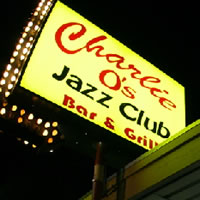
Man, I miss Charlie O’s…

(Charlie O’s closed it’s doors on the last night of August, 2011. I still miss the place. Here’s some things pulled from Brick’s Picks columns back in the day, just to remind you why you were always there.)

Charlie O’s has a solid seven straight night’s of killer jazz music this week. Every one a pick. If you can manage to do all your shopping in the vicinity of Victory and Woodman you can just kinda pop in on your way home every night. (There’s a 7 11 nearby, a liquor store, always a yard sale or two in the area, that should work.)  It kicks in hard with tenor Ernie Watts on Friday…if you’ve heard his latest, the live To The Point, then you know what’s in store.  Then on Saturday tenor Pete Christlieb takes over, with that shiny namesake horn of his and just blows solid, swinging stuff. (and his classic Apogee with Warne Marsh is a terrific stocking stuffer). Then on the Sabbath cometh Benn Clatworthy, another mighty player who wanders off the blues map as often as not, looking over edges, soloing through unknown territories, smacking into unseen walls…. We love this cat’s style. Check out The Decider, a nicely succinct display of his chops and thinking. For Big Band Monday they brought in the great Med Flory’s JazzWave. The heart of which is SuperSax (you crate diggers take notice), those massed brass and reeds playing Bird solo’s rendered into large ensemble arrangements without dropping the tempo an iota. Wild. Then on Tuesday it goes deep again with Theo Saunders’ quintet built around his imaginative Monkish-McCoy flavored constructions that lets soloists go some serious places. Great jazz. Then the trumpet players wind up the week with Jack Sheldon on the night before Christmas and Carl Saunders grinching up Christmas night itself. Like we said, every night’s a great one….

…..Now how about the genuine nightspots….real jazz junkies collect at Charlie O’s in the Valley. It’s this town’s straight ahead epicenter, and the crowd is purist, half of them players themselves, the rest jazzophiles. These people demand the real stuff, three sets worth. There’s usually no cover (except on Big Band Mondays) and there’s no minimum, what else you want? This Friday check out saxman Justo Almario, a Colombian whose impassioned sound is shot through with Trane (much like fellow South American Gato Barbieri used to, though Justo can bop with the best, too.) In fact, the great tenor work continues all weekend here….with the mighty Don Menza on Saturday, his is a big, fat powerful tone, the kind that as they said of Dexter Gordon, seems to fill the whole  room. And on Sunday it’s Doug Webb, who delivers with a passionate intensity and nods to Trane and Joe Henderson and Hank Mobley and all the rest of those cats. We dig him. Real jazz in a real jazz freak’s club.….

….Since the legendary all night contest when Lester Young finally cut Coleman Hawkins, tenor battles have been a jazz tradition. Crowds love it: Herman Riley and Rickey Woodard brought down the house last year at Catalina’s going chorus after chorus. But such matches are rare anymore. Battling tenor albums are even rarer. A particularly splendid example, Apogee, had Pete Christlieb and his mentor Warne Marsh going at it across two sides and the result was joyous, intoxicating hard bop. Alas, Warne is gone, but Christlieb has found a worthy sparring partner in mighty Don Menza. They sound nothing alike but share a passion for aggressive soloing and their past matches have been electrifying. No one gets humiliated—these are more chivalrous times—but the competition is real as the two battling tenors strive to outblow each other at Charlie O’s this Friday, April 13. It’s a perfect way to kick off a great week of local jazz…..

…..Charles Owens is at Charlie O’s again this Friday, with the fine quartet of pianist John Beasley, bassist Edwin Livingston, and drummer Roy McCurdy. Last time Charlie O played Charlie O’s he finished the night with a suite of half a dozen tunes, included some Miles, an incredibly funky “Cold Duck Time” (bassman John Heard owned the tune that night) that actually had people dancing (at Charlie O’s!), and then into a profound take on a movement from A Love Supreme that eventually segued naturally, somehow, into an extended avant-blues workout on “Meet Me With Your Black Drawers On”.  His playing had tapped all his specialties—the blues, the straight up, the hard bop, the spiritual and the out there. It went unrecorded of course.  Owens has few recordings. A few old LPs if you can find them, and last year’s fine So Far So Good but like so many of our local horn masters (and Owens plays nearly as many reeds as Rahsaan Roland Kirk) you have to catch him live. He’s a different animal in different venues: catch him in Dwight Trible’s Band and he summons up the ghosts of masters past, simmering low or exploding in Dolphy-esque fireworks. At the World Stage last year he went into the stratosphere with percussion accompaniment, an event we described deep in the pages of “The Best Of L.A.”  In a blues band he’s down and dirty. But at Charlie O’s he’ll run down the middle, veering into some blues here, some craziness there, but always back to the righteous straight ahead with an unparalleled “Eternal Triangle”. Don’t miss this one…..

….When alto saxist Zane Musa takes off it is a sight to behold. He leans into the wind and seems to blow out the crazy chords with every ounce of his being, rocking back and forth in some sort of jazz ecstasy. It’s a style not for everyone—some prefer their players cool—but for fans his wild Bird progressions, gutsy Maceo funk and all that Cannonball seem just right. Those influences and inspirations fuse into white hot flurries and molten blues runs that never fail to kick up the pace on the bandstand a notch or three. On Friday at Charlie O’s he’s backed by a terrific version of the John Heard Trio, with bassist Heard, drummer Roy McCurdy and pianist John Beasley.  An excellent way to open up the jazz week….

….There are a pair of saxophonists bookending the weekend at Charles O’s that absolutely slay us every time. On Friday we got Charles Owens, fresh from a big LACMA appearance. A masterful player (and orchestra leader…the Luckman has done brilliantly under his direction), Owens plays just about every reed and woodwind ever made (just dig him on English horn) and plays a mean dirty flute; but it’s on tenor that he is on fire. At the World Stage we’ve seen him go what looked like utterly out of his mind, all Dolphy and Kirk and late period Trane or a way gone Sonny running down East Broadway, you know, crazy clusters and Fulani scales and notes flying so fast, damn…. And at Charlie O’s we’ve heard the most soulful A Love Supreme, the crowd utterly silent, not a whisper or a stir till it fades on that final bass thrum…then hot damn it’s Charlie getting down with Eddie Harris, music so funky people are actually dancing at Charlie O’s, and so greasy they’re getting drunk. That’s Charlie Owens, delivering. And that’s part one. Part two is Benn Clatworthy, same stage on Sunday. You’d never think a foul mouthed Michael Caine-as-Alfie-sounding Brit would play saxophone as good as any Yank, even better than most. He’s got a voice on that thing, steeped in mid period Trane, in Booker Ervin, in lots of Sonny Rollins when Sonny was the greatest of them all. But that’s just the sound. But the ideas, the vision, the places he goes, pushing, daring…god damn. Nobody in LA does this. Maybe nobody nowhere. It can be the most radical. It can be the most hard bopping. It can be so gorgeous you will not draw a breath till that horn has expended his. His is an intense, radical, beautiful jazz playing and still completely in the tradition. So there ya go, two of LA’s most exciting saxophonists, just waiting for your ears. Oh…and who’s got the floor on the Saturday between them? Tenor Don Menza is who, and he can kick anybody’s ass. Don’t let no one tell you this town ain’t got great saxophone players…..

…..We first remember seeing pianist Otmaro Ruiz some years ago at Charlie O’s, where he once was pretty regular on the piano bench. We walked in one night and a perfect maelstrom of piano chords was filling the joint, customers yelling, the band in a jazz frenzy. We’d never heard jazz piano like that, the mad chord progressions, the crazy Latin rhythms we couldn’t identify, the things plucked from Chopin and chunks of Monk and Bud Powell. It was a different bar inside then, some ridiculous piano lounge layout from days when people hung in places like that, smoking too much and picking each other up, and the crowd stood round the piano and there’s was no way to see who the hell was making that crazy wonderful music. Otmaro Ruiz someone said. Who? Otmaro Ruiz, the Venezuelan guy. Like that explained it. But he really was an exotic, inexplicable genius back then, and just as thrilling now. We saw him with Dwight Trible at California Plaza this summer, and every time he soloed the audience shouted with excitement. He’s always exciting, with a mess of players or just a duet. He can completely blow your mind with some one-of-a-kind Latin American meets jazz thing, or an absolutely gorgeous melody awash in color, or an utterly mad explosion of ideas that defy words completely. He has a trio at the Blue Whale on Friday…..

….Charlie O’s is the quintessential jazz room. Outside is a non-descript stretch of the Valley, but you walk inside and it’s dark, with a low stage at one end and a handful of players jamming their asses off. So leave it to this joint to book saxist Chuck Manning with John Heard’s house trio when you’re all supposed to be home with the eggnog and Andy Williams. Manning’s intensity really comes out here with John Heard behind him, there’s a toughness to his sound at Charlie O’s. He probably has that sound everywhere he plays, actually, it’s just something you notice more at Charlie O’s, the way you notice the chance taking at the World Stage or new ideas at the Blue Whale. A great room has a vibe, and Charlie O’s has that bad ass nothing but straight ahead vibe. Which makes it special. And not sappy on Christmas Eve….

….Now Charlie O’s has a purist vibe, too…but it’s still a place where you can just waltz in on most nights (there is a cover on Mondays) and sit at the bar and down a few as well. It’s a jazz joint, our one true jazz joint, and as jazz has always been made in joints since time primordial, it is in that sense maybe the purest jazz venue in town. It certainly has a helluva line up this week, beginning with house band the John Heard Trio (with drummer Roy McCurdy and pianist Theo Saunders) hosting a pair of Trane-mad saxists this weekend: Justo Almario on Friday and Azar Lawrence on Saturday. Saunders’ McCoy Tyner inspirations connect especially well with Azar; his Monk underpinnings work beautifully with Justo. On Sunday trumpeter Carl Saunders leads his sextet there…the man’s technical skills are extraordinary, his Live at Charlie O’s (of course) is a veritable handbook on the things one can do on a horn without need of another breath. And grooving trumpeter Elliott Caine has his Charlie O’s debut on Tuesday. But the high point for us is Theo Saunders again, fronting his own sextet on Wednesday. He’s collected some exceptional players: tenor Chuck Manning and alto Zane Musa (both are fine and completely distinct soprano saxophonists as well), his longtime trombonist David Dahlsten, and the powerful team of bassist Jeffrey Littleton and drummer Tony Austin. Saunders is an underrated composer (word has it that he has several albums of stuff out somewhere), his pieces can be difficult, if beautiful, and are rhythmically complex, his solos are always surprising and for some reason we really dig his unpredictably right-on-the-money comping best of all. Four whole sets of the stuff and no cover, baby, just a couple of drinks. Can’t beat that.


Jazz panel

(2009)

I was at a symposium or something once that had jazz panels. I hate panels. I hate anything jazz that doesn’t involve people actually, you know, playing jazz music. I got lots of better things to do.  But I checked out one of these panels, though, because it had an old alto playing be bop buddy of mine on it. But it was dull anyway. Dull dull dull. Even the panelists looked bored. So I told a pal sitting next to me that I could completely wreck it. He said I couldn’t. I said just watch this, and raised my hand and asked about Johnny Hodges. My old be bop alto buddy hates Johnny Hodges and out came a long winded, offensive and hysterically funny diatribe against the way Johnny Hodges played saxophone and against pre-bop alto saxophonery in general.  People in the audience were offended and yelled back. After a few raucous minutes things finally settled down. So I raised my hand again and asked about Art Pepper. My old be bop alto buddy hates Art Pepper and went into another long, offensive and hysterically funny harangue against Art Pepper. All hell broke loose again. The famous trumpeter on the panel, to calm things down, told an extremely rude joke about Puerto Rican women. The famous trombone player talked about how high he used to get. My bop buddy talked about reefers. The trumpeter told another rude joke. The trombonist had a million drug stories. My buddy went after Johnny Hodges again. The trumpeter told another joke. All three panelists were in stitches. People walked out. The moderator just gave up entirely.

And while that was probably the best jazz panel ever, I promised myself that I would never do that again.

So consider this an apology.